Pages

NOKIA

Hands-on: Nokia Lumia 610

SAMSUNG

Samsung Galaxy Chat goes big on texting

WiFiSlax

Hack Wifi : WiFiSlax 4.1 Final (WiFi Hack BootCD)

SAMSUNG

Samsung Galaxy Pocket

Motorola

Motorola Atrix 2

Friday, July 6, 2012

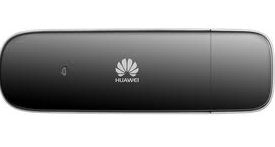
Huawei launches world’s first plug and link datacard HiLink in India

Huawei, a leading global information and communications technology (ICT) solutions provider, on Thursday commercially launched the world's first plug and link data card, the HiLink E303Cs in India.

Powered by a number of patented technologies, the HiLink E303Cs automatically connects users to the Internet in as little as 15 seconds after the datacard is inserted into the USB port, without the need for a tedious dial-in process, driver installation or manual configuration. This is up to 75% faster than products currently on the market. The HiLink E303Cs is the first EDGE/GPRS/GSM-compatible product in the Huawei HiLink series that supports HSPA+network with 7.2 Mbps Downlink. The HiLink is available pan-India July 2012 onwards, in telecom and PC stores and online channels. MRP of HiLink is 2199.
                                                               
 “Huawei is committed to providing Indian consumers with products that feature ease of use and optimal user experience. With customers at the heart of our strategy, we have been at the forefront of datacard development with industry leading technologies and product form factors. Leveraging revolutionary 4th generation datacard technology, the HiLink series is poised to change the datacard industry landscape. The HiLink technology is the result of more than one year of dedicated research and development and we believe that it will not only enhance consumers’ user experience, it will also enable operators to reduce backend development and maintenance costs and speed up UI customization, enhancing the competitiveness of their products”, said Victor Shanxin, President, Huawei Device India.

Samsung Galaxy Chat goes big on texting

Samsung Galaxy Chat Phone
Scrolling down the Galaxy lineup, the new Samsung Galaxy Chat can be seen seated on the lower end of the shelf. Going by the specifications sheet, it’s a very basic smartphone crafted for those who find themselves texting or chatting quite frequently.
Centered on social networking, the device sports a full QWERTY keypad as well as a 3-inch, 240 x 320p TFT LCD touchscreen which surfaces a virtual keyboard with Swype technology. It is powered by Android 4.0 and an 850MHz application processor. The 4GB of internal memory can be expanded up to 32GB via a microSD card and there’s a 1,200mAh battery providing all the steam.
“Navigating the phone’s app menus is a breeze with more visual icons incorporating 3D effects, a fully customizable Favorites tray, and widgets that you can resize or reposition according to your preferences. You also have the ability to launch the camera or view your notifications directly from the lock screen; and multitasking is made even easier with features such as the ability to swipe apps to instantly dismiss them,” says Samsung.
Samsung Galaxy Chat
Navigating the Touchwiz UX, users should be able to access various Google Mobile services as well as Samsung applications. For business-centric requirements, the Quick Office app is present to allow opening and editing of Microsoft Word, Excel, or PowerPoint documents. On the connectivity front, this Samsung phone has been loaded with USB 2.0, Wi-Fi 802.11 b/g/n and Bluetooth 3.0.
Even though the company hasn’t been very forthcoming with the Samsung Galaxy Chat price, we do know that it will start rolling out in Spain in July. Latin America, Europe, Middle East, China, Southeast Asia and Southwest Asia will welcome it thereafter.

Thursday, July 5, 2012

Particle resembling the Higgs boson discovered, say CERN scientists

Particle resembling the Higgs boson discovered, say CERN scientistsPhysicists working at the CERN laboratory on the Large Hadron Collider's (LHC) Compact Muon Solenoid (CMS) and A Toroidal LHC Apparatus (ATLAS), claim to have discovered a particle which resembles the elusive Higgs boson popularly known as the God particle which is the key to understanding the formation of the universe in a way. At a seminar held at CERN, the ATLAS experiment – one of the seven particle detector experiments at the LHC – presented its preliminary results observing a new particle in the mass region of around 125-126 GeV.
“We observe in our data clear signs of a new particle, at the level of 5 sigma, in the mass region around 126 GeV,” said ATLAS experiment spokesperson Fabiola Gianotti. Which means that scientists are 99.999 percent sure of the results or a false positive probability of 1 in 9 trillion!
Although the results are preliminary, based on data collected in 2011 and 2012 with the 2012 data still under analysis. The complete results will be presented towards the end of the year when the LHC will have completed more experiments with more data. The announcement definitely points to a new particle's discovery which fits the description of the Higgs boson.
In a leaked video from CERN, which is now taken off from the CERN website, Joe Incandela, the CMS experiment spokesperson says, “We've observed a new particle... we have quite strong evidence that there's something there with a mass roughly 130 times the mass of the proton.”
According to the Standard Model – a theoretical model which describes the fundamental particles and forces that control the Universe - the Higgs boson provides mass to all other particles. The experiments being conducted at the LHC aim to collide protons travelling towards each other at the speed of light. The debris that would be formed after the collision would be examined. Here is a graphical video of the same collision.


Here is the video that was taken off by CERN but which is still available on the net. Do also check out the live webcast of the news conference announcing the discovery, here.
Courtesy: CERN, Telegraph

Samsung Galaxy Pocket


samsung galaxy pocket2-336.jpgBudget smartphones are those that hold consumers’ hands as they transit from feature phones to the smartphones. They offer a “smart OS” and features that give users a tip of the iceberg view of the potential of owning a smartphone. They may skim on certain features but then again, you get what you pay for.
Today we have with us the Samsung Galaxy Pocket, an entry-level Android smartphone that’s small enough to fit in anyone’s palm.
Is the Samsung Galaxy Pocket one of those good things that comes in small packages, or are you better off overlooking this device?
Design and Build
One look at the device and it looks like a mini Samsung Galaxy Y. The device is really small and fits in the palm. The body of the device is plastic but with a classy enough finish considering the price point.
On the face, the device has a 2.8-inch display with a resolution of 240x320 which is the standard resolution found on devices with display sizes up to 3-inches. Below the touchscreen, the device has the menu, home and back button. In terms of connectivity, the device has the headphones jack and the micro USB port on the top of the device and the volume rocker rests on the left. The right of the device houses the on/off/sleep/wake button. The rear of the device houses the 2MP camera without a flash and it compromises on a front facing snapper.
All in all the build of the device is sturdy, small and in a word, cute. It wouldn't be a surprise if you mistake the device for a toy. It is really light too, weighing in at a mere 97 grams.
Features and Specifications
Straight out of the box, the device is running Android 2.3 Gingerbread skinned with the TouchWiz UI. Under the hood, an 832MHz processor powers the device. The device also has Wi-Fi along with Bluetooth 3.0.
The hardware under the hood is basic and just enough to run the OS and some apps. The other budget Android devices that boast of similarbasic features are the Micromax A50 Ninja and the Spice MI 350N.
In terms of preloaded apps, the device comes with the same ones you get on other budget Samsung Android phones. You get Social Hub, Samsung Apps and Polaris Viewer, apart from access to the Google Play store to download the plethora of apps available.
TouchWiz is quite good as a skin. For those of you that don't like it can always download third party skins from the Play store.
You can run most of the apps on the device but don't expect stellar performance. Angry Birds Space took its own sweet time to load but once it loaded, the game ran very smoothly.
Performance
In terms of raw benchmark performance, the Samsung Galaxy Pocket performed surprisingly well. It was neck to neck with the Spice MI 350N.
In Quadrant the Galaxy Pocket scored 885 as compared to the Spice MI 350N that scored 801. In AnTuTu, it scored 1878 as compared to the closest runner up, the Spice MI 350N that scored 1704. In GL Benchmark - Egypt Standard however, the Spice MI 350N blew the Galaxy Pocket out the window. The Pocket scored 2801 whereas the Spice scored 3057.
In terms of the multimedia performance, the Galaxy Pocket is a mixed bag. YouTube ran extremely well on the device. The audio was very clear but the visuals were a bit disappointing. Considering the hardware under the hood of the device we didn't expect it to play anything above .3GP videos and low res MP4’s.
The Galaxy Pocket’s 2.8-inch display has a resolution of 240 x 320, which is average. The display was clear, colours were good but the screen lacks vividness. Under direct sunlight however, the device is susceptible to a lot of glare.
The speakers on the other hand of the Galaxy Pocket are quite good. Running apps like Angry Birds was a treat as the audio was immersing and loud. We played a bit of Nickelback as well through the device and the speakers were loud even though there was loss of clarity at high volumes. Playing games and running apps on the device was smooth even though some apps took their own sweet time to load. Don't expect the device to be handle multitasking as the hardware under the hood is bare bones.
The surprise element of the device is however the keyboard. Since the screen is so small, we thought that the onscreen keyboard would be cramped and cumbersome but we were proven wrong. Even though it is small, the typing experience is better than the HTC Explorer and quite good. Errors during typing were few and far between.
The device houses a 2MP rear snapper without a flash whose performance can be considered average. You will rely heavily on ambient lighting for most of your shots, as the night shots are plain dark. The device doesn't have a dedicated camera button but this really isn’t missed. The camera app gives you access to a bench of scene modes and settings, which is nice.
Coming to the core function of a phone – making calls. The device is a single SIM phone and boasts of 3G capabilities. The call quality from the device is very good. The audio at both ends was clear and the loudspeaker performance was solid as well.
The device boasts of a 1200 mAh battery. In real world usage, the device will last you about one and half days. We ran a bunch of apps, sent some social networking messages, and made an average number of calls - the Galaxy Pocket still had some juice towards the end of the next day.
Bottom Line
The Samsung Galaxy Pocket is a decent phone considering the price point and the features on offer. The device has a good build, and the features and specifications will provide you with an entry-level Android experience. The screen size may be too small for some but in that case you can take a look at the Spice MI 350N. If you are considering picking up your first budget Android device, this phone can definitely be on your list.


Motorola Atrix 2

atrix2-3-3-336-3.jpg 


Review :

 For what is essentially a higher mid-range Android smartphone, the Motorola Atrix 2 ticks most of the boxes on the checklist. Unfortunately, a couple of things are missing. But then again, only the very finicky ones among us will probably give that fact too much weightage.
Build & Design
The Motorola Atrix 2 has very plain Jane looks. Unlike the new Sony NXT range of smartphones, or even the unibody of the HTC One V, the Atrix 2 keeps it pretty much old school. A thin frame on two sides flanks the 4.3-inch display. But the top and the bottom have a couple of design elements. The earpiece stands out, with the silver grille finish. The front facing camera is visible when you look closely, but it almost blends in seamlessly. On the bottom are four touch sensitive keys – menu, home, return and search. The left spine hosts the USB and HDMI ports, while on the right are the volume rocker and the camera key. The power key and the 3.5mm jack on the top. Flip the Atrix 2 over, and the plastic back has a slightly rubberized feel with an imprint design on it. The 8MP camera and the flash are placed towards the left, near the top, a placement that may seem odd, but works well. We will explain that in a bit. The silver Motorola logo lies in the middle, with the chrome bordered speaker on the bottom.
There is not much to rave about the build quality, except that it seems well put together. This phone will not stand out in the crowd like an Xperia NXT or the HTC One V would, but should get the job done. There is a sense of reassurance when you hold the phone. It is technically a big screen phone, but doesn’t feel like it in the hand or in the pocket. The thin bezel could have something to do with it. Very comfortable to use overall, and you can use it with the same hand that is holding it, and still reach the further edges of the display without having to stretch.
Features & Specifications
A 1GHz dual-core processor, paired with 1GB of RAM, powers the Atrix 2. The graphics capabilities are quite good, with the Power VR SGX540 chip driving the gaming bit. The 4.3-inch display on the Atrix 2 has a 540x960 pixel resolution, and while it is a humble LCD one, there is the Gorilla Glass treatment on it.
The phone comes with 8GB of internal storage, and a microSD slot upgrading it to a maximum of 32GB more. The 8MP camera is pretty standard spec, with recording for 1080p HD videos.
The disappointing thing is that the phone comes with Android Gingerbread (2.3.6), and till the time of writing this, there has been no Ice Cream Sandwich update released for the phone. This is just truly disappointing, considering even older phones from Sony and HTC have received the updates, already. The skin over the OS is pretty simple and there is no gaudy nature to it. In turn, sacrificing some of that eye candy does have a silver lining – system performance does not get affected, much. But then again, it doesn’t have to be this bland to ensure performance! We had criticized the MotoBlur UI even when we had reviewed the flagship Razr handset, primarily because the widgets have a very boxy design, and the sharp edges across all elements on the display do tend to become quite boring after a while.
About the performance and stability of this UI, we didn’t face any stutters or slowdowns while using it. However, the lock screen “tap and slide” did disappear a couple of times, not letting us unlock the phone. A couple of restarts solved the issue, but this was extremely annoying during testing. And surely will be scary for a consumer, who will probably be worried that his phone is broken!
Performance
No one can fault the Atrix 2’s power ambitions with its 1GHz dual-core, that's coupled 1GB of RAM. Ideally, this phone was probably visualized to be selling with a higher price tag, but the new quad-core ones just came along and spoiled the fun! For the sake of a more like-for-like comparison, we will be comparing the Atrix 2 to the HTC One V.
In the performance benchmarks, the performance is quite neck and neck. With Quadrant, the One V has a very slight lead. There are two ways to look at it – one, the Atrix 2 is holding on well despite being a on a slightly older generation hardware. Second, just to annoy the HTC fanboys – the One V isn’t much better in terms of performance than a phone that has been around for quite a while now! In AnTuTu and LinPack benchmarks is where the Atrix shows a clear lead over the One V. The biggest surprise has been the sheer superiority of the Motorola’s web browser over the one on the HTC One V.
The 4.3-inch display is one of the Atrix 2’s strong points. The resolution of 540 x 960 pixels means this one will handle video playback well, potentially. And it truly does that. Black levels are surprisingly good, and fast moving frames are handled quite smoothly. But the real cherry on the cake is how crisp the text on this display is, and that really makes texting and web browsing very comfortable. Colour vividness is okay, but then again, that is limited by the display technology of the display – possibly the only aspect where this display takes a beating.
Call quality is quite good, as long as you are in a good signal reception zone. The moment signal reception goes below 50%, the audio tends to drop quite a bit. But for the rest of the time, the quality and clarity of the call, at both ends, is pristine. The earpiece is loud, but has a soft tone to it, and won't hurt the ear even at max volume. The handsfree speaker isn’t very loud, and will not work outside a room.
The 8MP camera is quite good in good natural light, and when there is sufficient amb7ient light indoors. The details are retained for the most part, and you can blow up the images to a certain extent and not detect the noise bit. Lower light step by step, and the images tend to become noisy. Video quality needs the same amount of hand holding, and 1080p videos are smooth, even when panned quickly. Interestingly, the camera will not take images unless you have a memory card slotted in! We quite understand this limitation, and it seems to be an unnecessary roadblock in an otherwise smooth journey.
Battery life is decent enough to get you through a day, and still have some juice left. Under medium call, text and data usage, the 1785 mAh battery will last a day and a half. And that is actually quite good, mostly thanks to the big battery in this one.
Bottomline
We love the Atrix 2, and for a price of around Rs. 20,000 in stores, this one is a very solid Android phone to have. The best part is the battery life on offer. However, we have one big complaint, and that is the OS version on the phone. It isn’t doing any justice to be users that they get palmed off with an older Android version, while phones with lighter price tags get the latest build. Motorola needs to sort this quickly. Till then, we will recommend the HTC One V to most buyers.

Tuesday, July 3, 2012

Official VLC media player beta for Android

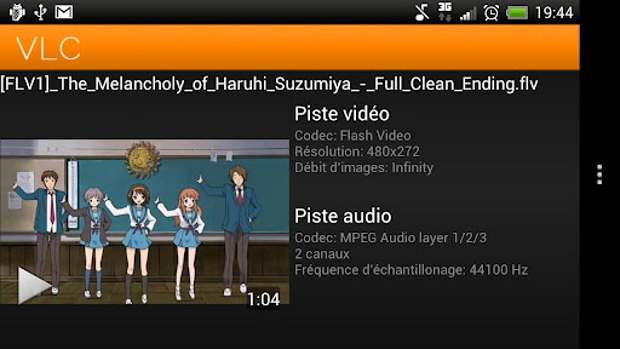
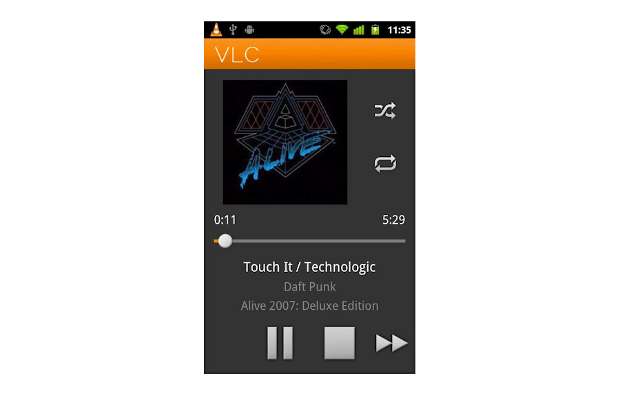
The VideoLAN mobile team has released the first beta version of VLC media player with several features, for Android 2.1 or higher devices.

VideoLAN mobile team has released the first beta version of VLC for Android. Currently the VLC media player for Android is in beta stage but it can still be downloaded on select Android devices running on specific versions of ARM processor. VLC media player for desktops is that all-in-one style software that supports playback of a large variety of video and audio formats. The new VLC beta (Neon) has been released for Android smartphones and tablets.
VLC media player beta for Android
Last month, The Mobile Indian reported that the VLC player for Android was expected to be released in a few months. Finally the first beta build of VLC media player for Android is available through the Google Play Store.
VLC media player beta for Android
Neon supports only select processors - ARMv6, ARMv7 and ARMv7+NEON.
VLC media player beta for Android
To use VLC beta your phone should run Android 2.1 Eclair. Though this is a beta build, the VideoLAN mobile team managed to add a good set of features such as network streaming, multiple audio/subtitles tracks selection, multi-core decoding, support for subtitles - external and embedded, and even headphone control with gestures.
Beware of the knock off VLC media players available in the Google Play store. Try out the official VLC beta from the Google Play store.